

dialogue
[Noun]
Why is dialogue the opposite of conflict?
The practice of dialogue is an exchange of ideas and opinions between two or more individuals, groups of people, countries or governments that gives us the opportunity to clarify, rectify, and come to an understanding. Open and safe dialogue leads to healing and change for all involved.
What is the value of dialogue?
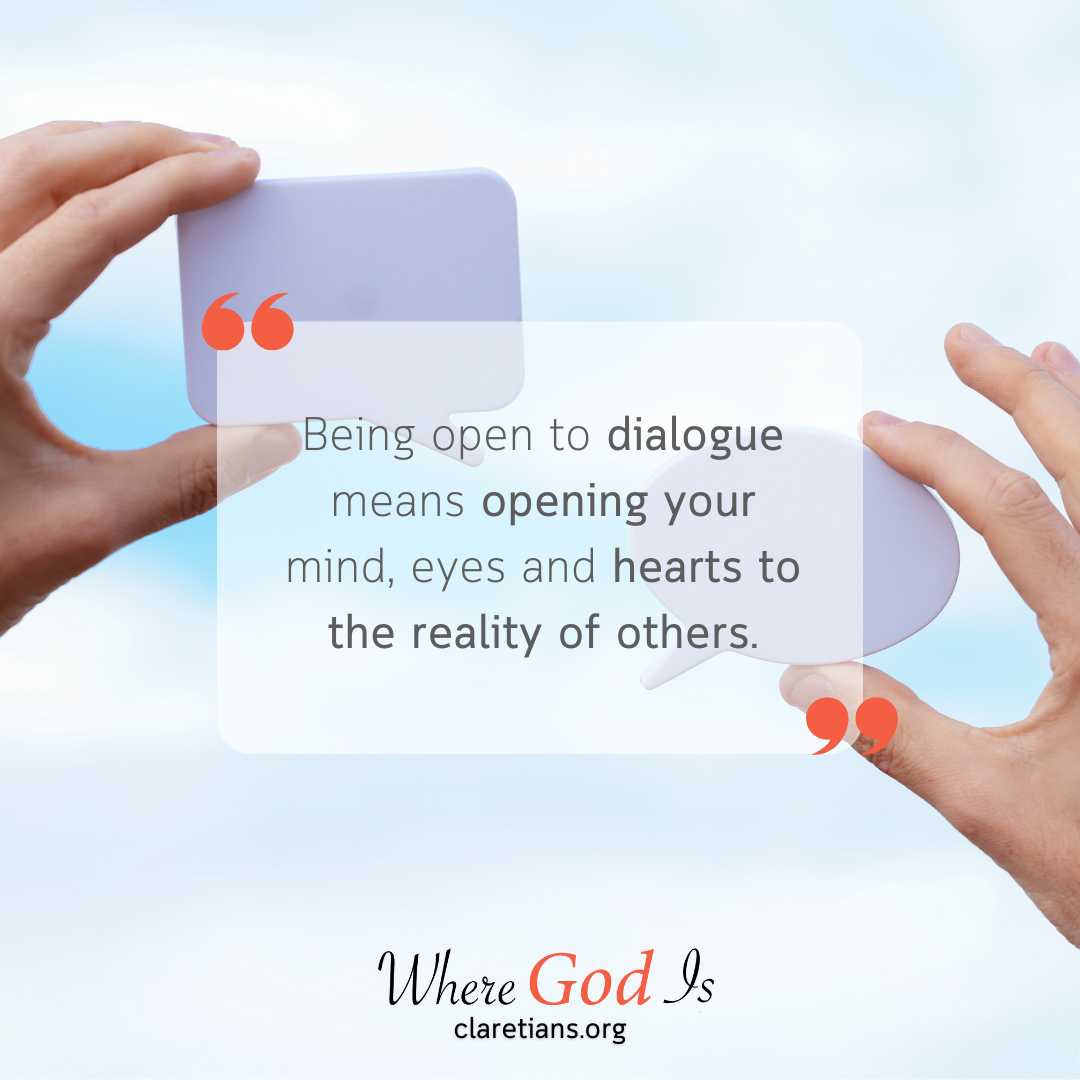
Dialogue means opening your mind, eyes and heart to the reality of others and leaving your preconceived ideas behind. A productive dialogue invites you to speak honestly, listen with your heart, and respectfully process the thoughts and feelings of others before responding.
This is how Jesus engages with the blind beggar, the good Samaritan, and the lawyers and scribes. But in our digital society, that can be hard. What appears as “connected” can also leave us drained, confused, and more alone.
Being open to dialogue is one more way to see God in others and to share God’s compassion with all those we meet, virtually or in person. Every time we communicate with honesty, even with disagreements, we open the door to new perspectives.
Dear God,
Our world needs You. Open our hearts to truly see You in others. Help us speak truth and love through our words and make You known to others through our actions. We pray for the healing of those who have been hurt by the words of others. Open our ears to be better listeners and our minds to communicate with honesty and respect, so we, too, may grow in love and wisdom.
What kind of conversations are you willing to have this week?
“The reality today is that we are all interdependent and have to co-exist on this planet. Therefore, the only sensible and intelligent way of resolving differences and clashes of interests, whether between individuals or nations, is through dialogue.”
—The Dalai Lama

Receive a new insight in your inbox once a week.
