

compassion
[Noun]
What is the definition of compassion?
A willingness to be fully present to someone else. The word itself comes from Latin: con patire, which means to suffer with. To be compassionate, we must be aware of the suffering of others, see their pain, and be moved by love to alleviate their sorrow.
What does compassion for others look like?
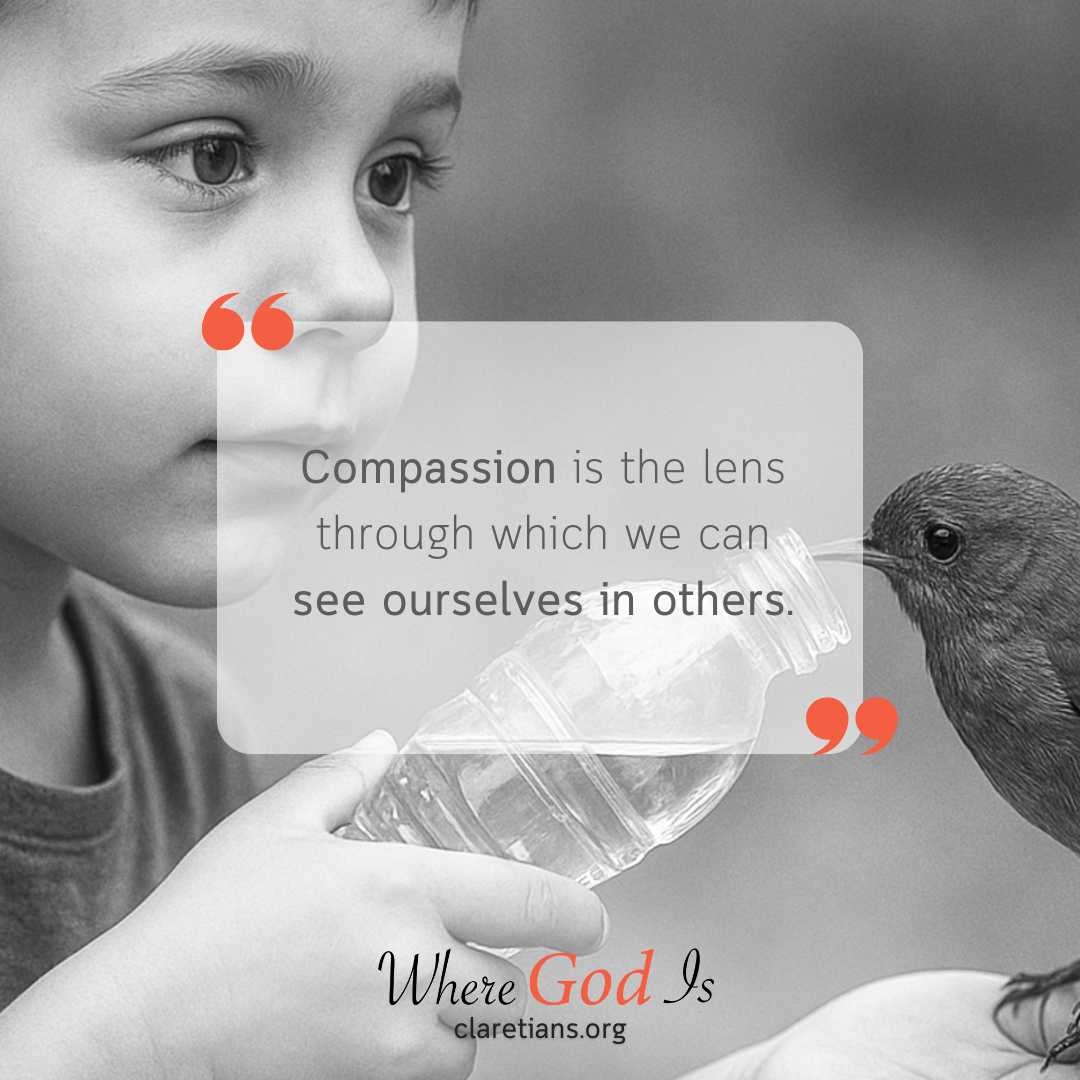
Compassion is the lens through which we can see ourselves in others and cultivate empathy, kindness and wisdom.
A hug, a prayer, a moment of silence sitting next to someone who is in pain: all of these actions say, “I am here, I care. I may not be able to fix your problems (and you might not want me to!), but I can share your suffering. I can listen to your fears. Your experience matters to me.”
Presence is a compassionate response. It looks like being with someone in their difficult times, their solitude and agony, in their joy and anticipation, in the moments that matter most, without judging them. This is how God loves. Compassion mirrors God’s unconditional love.
Compassion is not the same as pity. Rather, compassion helps develop mutual understanding. It heals broken relationships and brings us together. Compassion is a gift of love that we are called to give and receive in abundance.
Prayer for Today
Dear God,
Help me see the world through Your eyes. Give me the strength to do what is right and follow in Your footsteps. Help me open my heart, my eyes, my mind, and ears to the sorrows, joys, and hopes of the world. May I have a compassionate heart like Yours, one that sees the needs of others and acts upon them. Amen.
What does compassion look like in your family, in your neighborhood, and in your heart?
“I can’t bear seeing misfortune or misery without doing something to help.”
—St. Anthony Mary Claret
Where God Is aims to find holiness all around us. Read more.