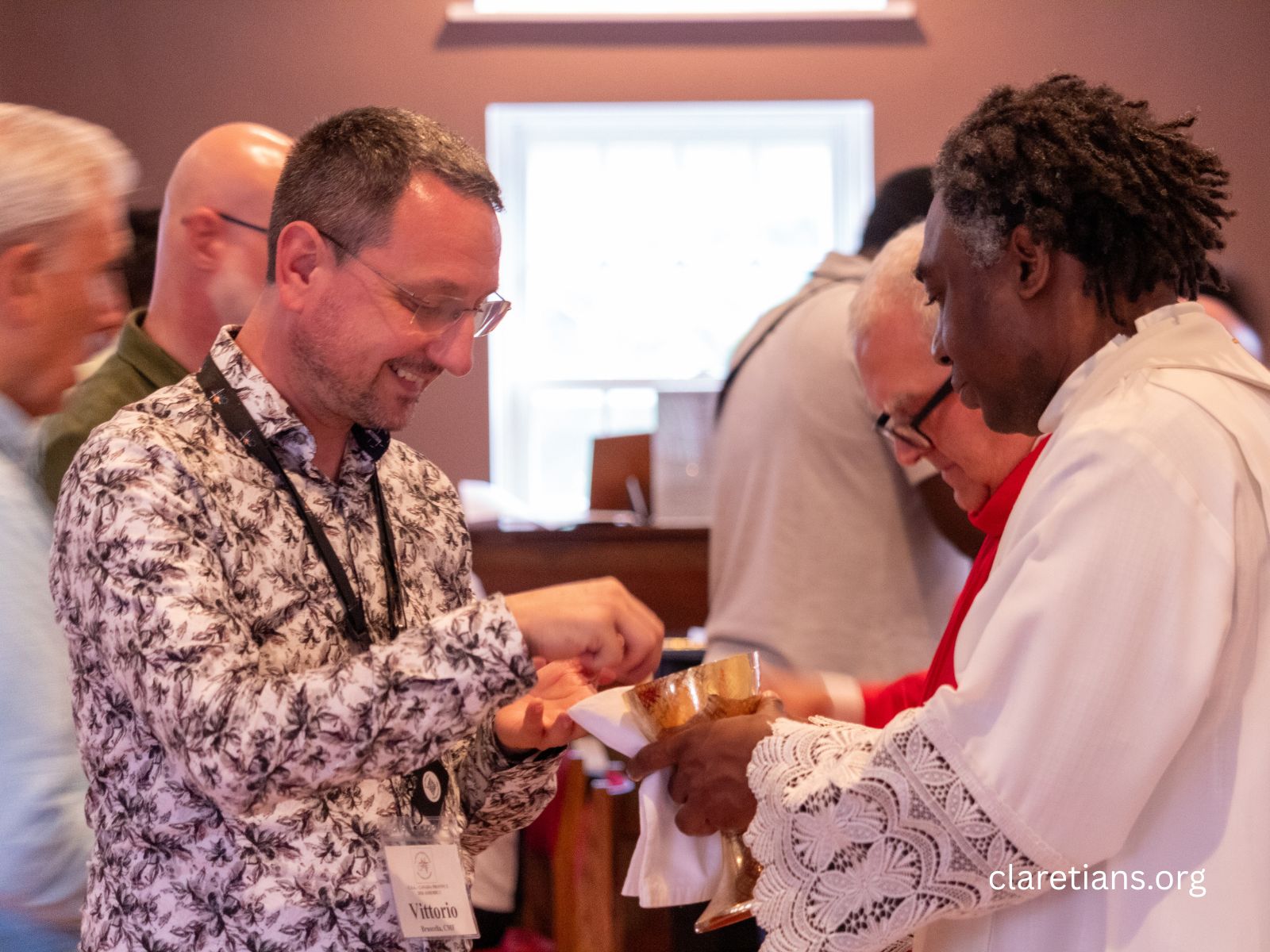

In 1939, with nothing in their bags, a group of Claretian missionaries fled Catalonia, Spain in the midst of revolution and religious persecution. They decided not to go to Rome; instead, they went to a remote village in Italy, arriving in the middle of winter in the humble region of Altamura in the province of Bari.
“They were poor priests for the poor, and they preached to the poor,” says Fr. Vittorio Bruscella, CMF.
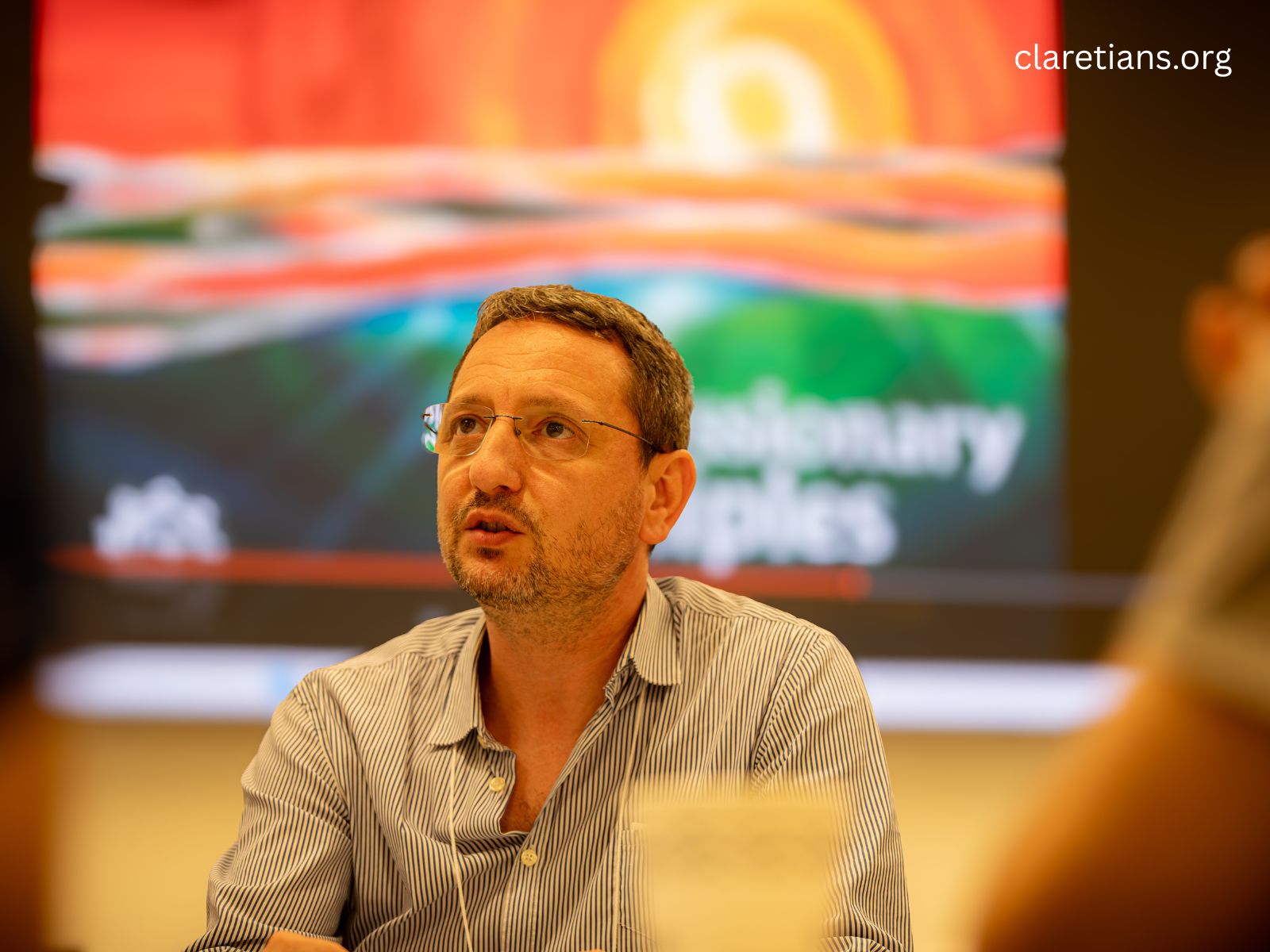
From childhood, Fr. Vittorio was fascinated by the work and dedication of those Spaniards who had come to his town. “Everyone in Altamura knew them, and when families faced problems and difficulties, we all turned to the Claretian priests.” And so, at the young age of 14, Fr. Vittorio’s religious vocation was born.
The idea of becoming a missionary and traveling far from Italy to spread the word of God was one of the things that most attracted him to joining the Claretians. But God had other plans. For a time, during his diaconal formation, he worked in Italy at the so-called “oratories,” which are gathering places for young people where they receive after-school instruction, ranging from academic to artistic. It was there that he began working with young graffiti artists and encouraged them to express their art in a different, more socially constructive way. Soon, the number of young people attending the oratory had multiplied thanks to the young Claretian priest.
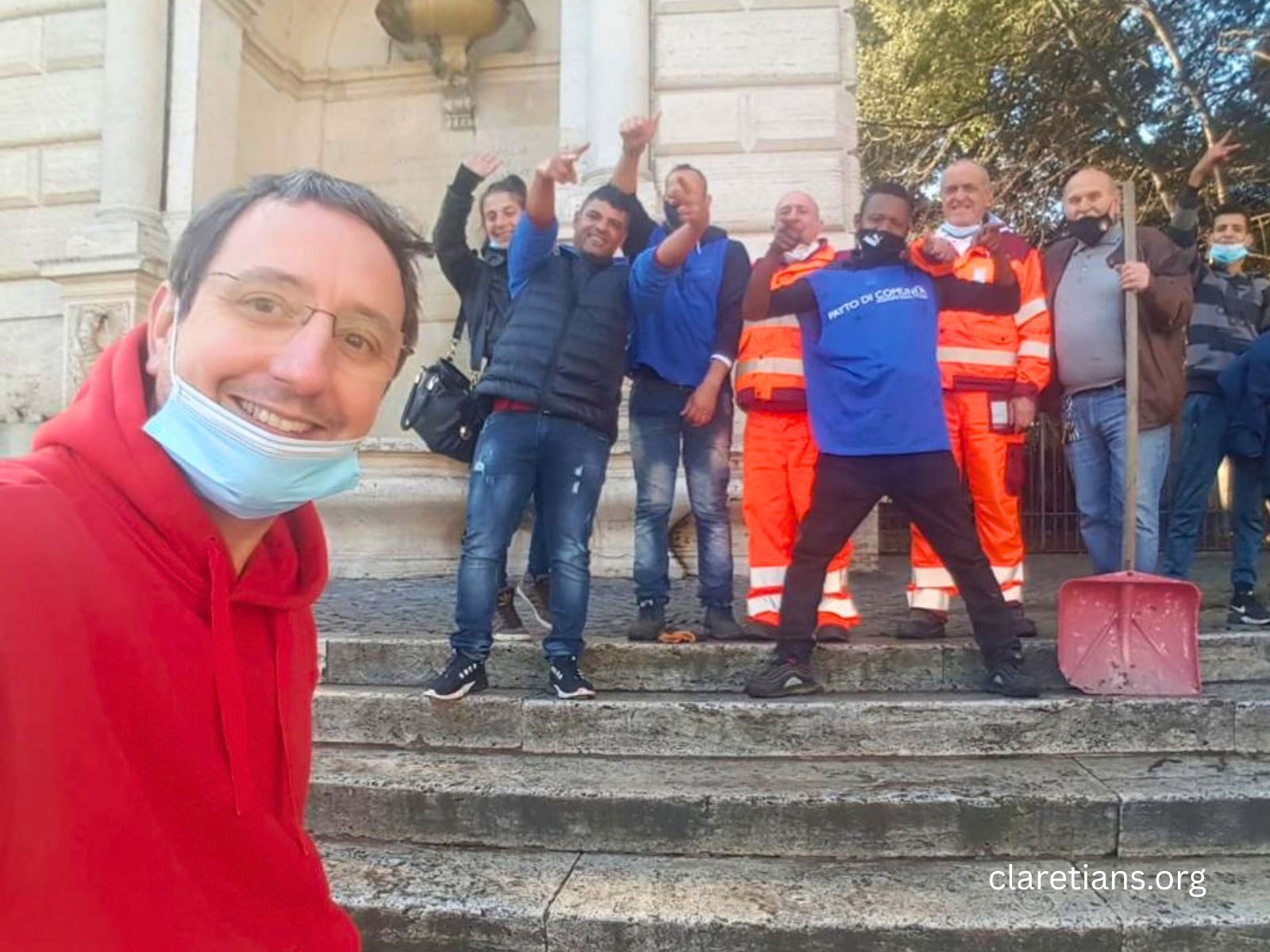
Later, his dream of becoming a missionary happened, but it was short-lived. When he was sent to Africa, he had to return abruptly due to health issues. His provincial superior told him he wasn’t cut out for missionary work, since his body couldn’t handle it. So he was assigned as parish priest in the very town where he was born. “Just imagine what a disappointment, what a contradiction. I mean, to be a missionary, and then they put you in your own town. But I accepted on the condition that I would serve as parish priest for only three years, while they looked for someone else.”
Six years passed, and his desire to be a missionary seemed increasingly impossible—until, by a twist of fate, he dared to ask his provincial superior about the possibility of serving in another country. He mentioned that the provincial superior for the United States was visiting and that he should ask him if there was a place for him. And that is how Fr. Vittorio ended up serving in the Canadian province for a year, before arriving in Chicago in Avril 2021.
His dreams as a missionary were grand, but God had one more test in store for him: the language barrier. Learning English, he says, changed his plans and taught him to accept his limits. “It has made me more humble,” he reflects. “It touches you and says: ‘You’d like to do more, but this is what you can give.'”
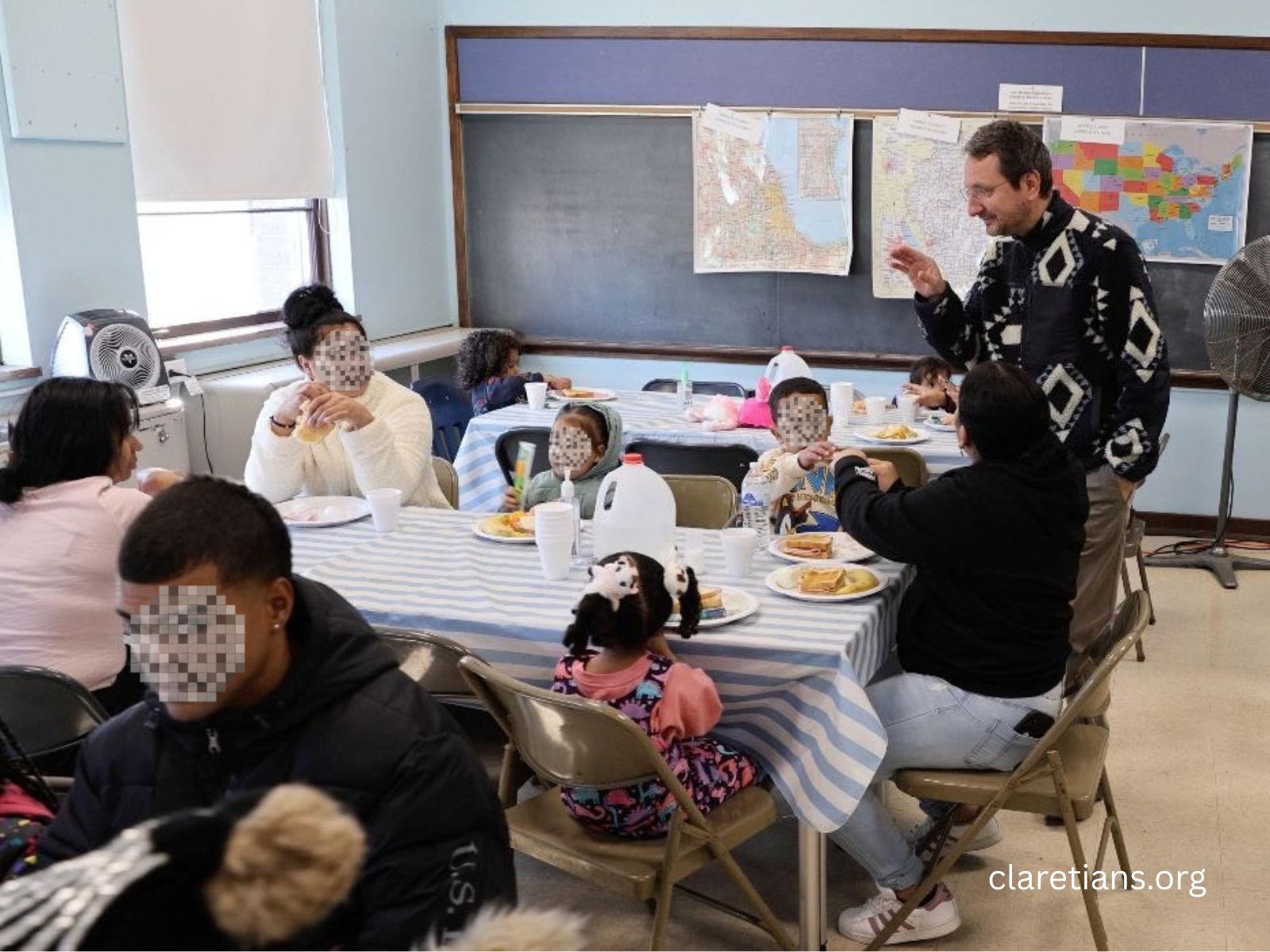
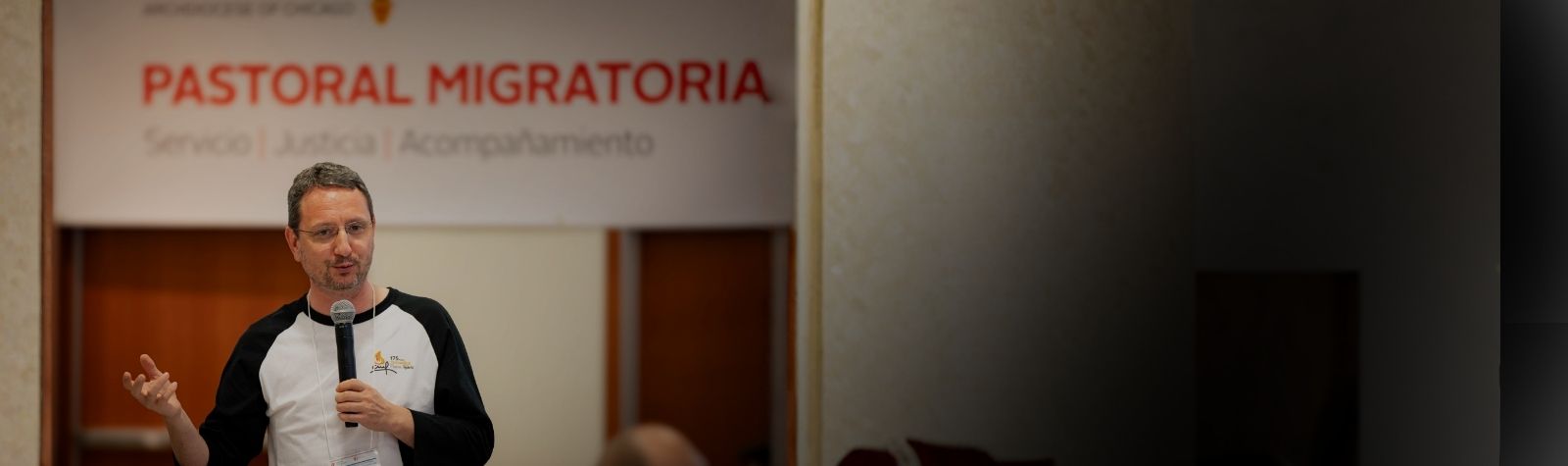
Then in 2023, in the midst of the immigration crisis, Fr Vittorio began serving incognito at the immigrant assistance center in his own neighborhood, without anyone knowing he was a priest. He simply arrived as a volunteer.
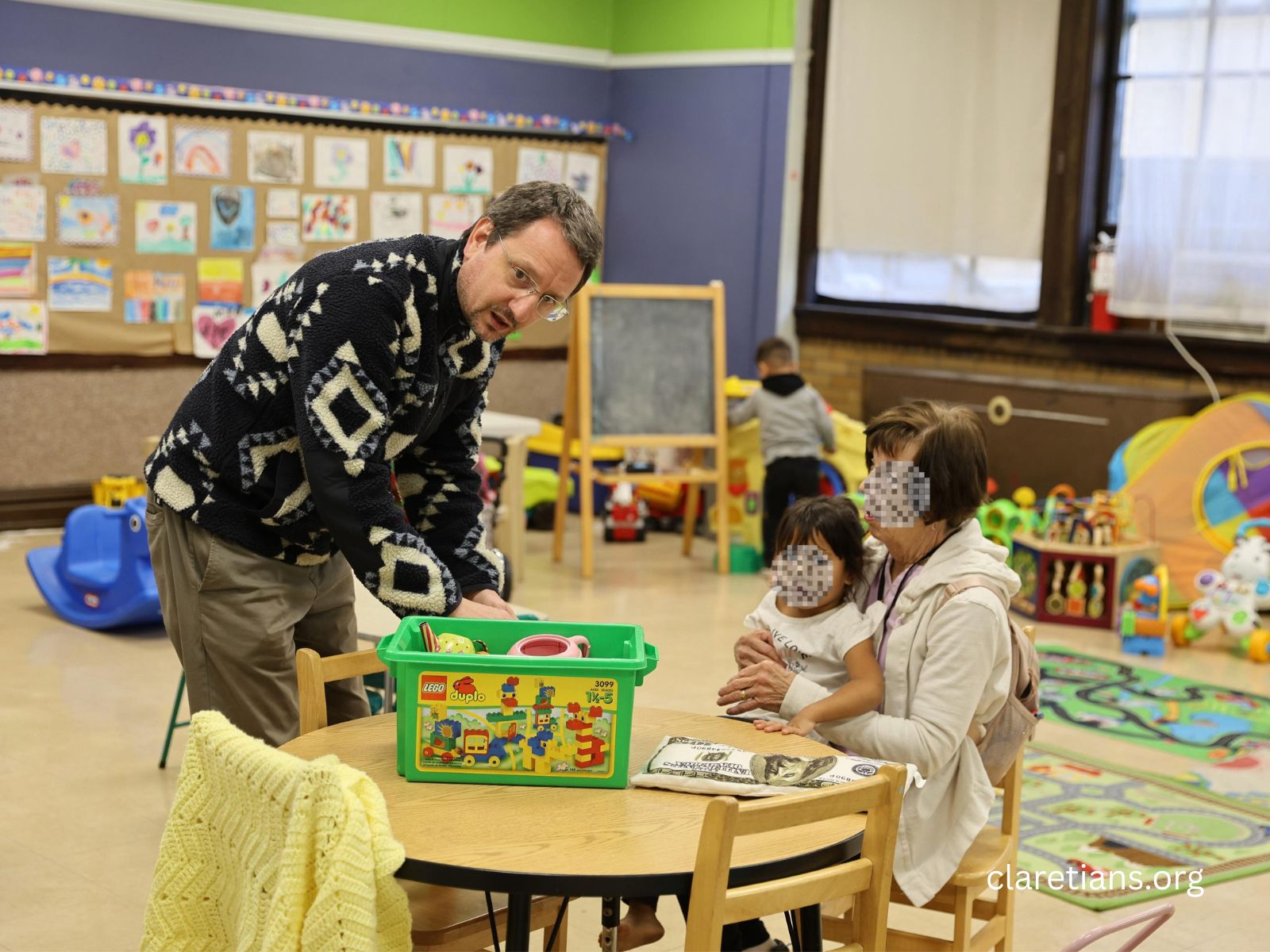
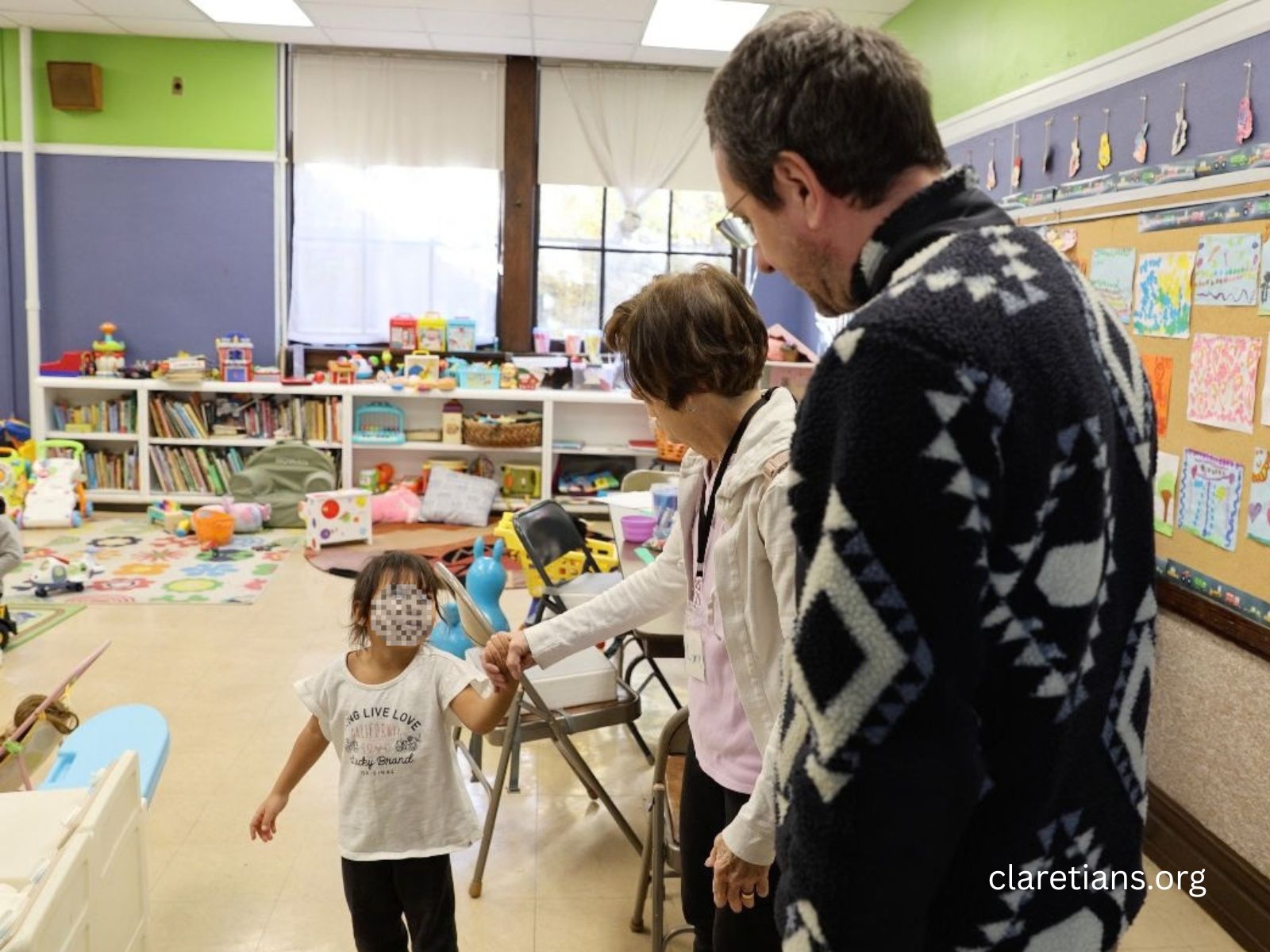
The local parish priest did not speak Spanish and struggled to give instructions to newcomers from Spanish-speaking countries, particularly Venezuela and Colombia. When he realized that Fr Vittorio could communicate with the immigrants, he gradually began to become more involved in caring for and accompanying those who arrived at the center.
“I understood that I had to be there—yes, but as a priest, because people are looking for a shepherd. People want to sit down and open their hearts. They don’t do that with others. When they sit down with the priest, people are different.”
What began as an anonymous service thus became part of his apostolate as a priest and of the personal mission that guides his ministry: “To be the voice of those who have no voice, the voice of those who are not heard.” He never planned to start a ministry with migrants. It emerged from simply being there, trying to help with the smallest tasks.
In this video, he shares an encounter at the center that redefined what it means to accompany people as a missionary priest. Watch Fr. Vittorio share it in his own words:
Today, one of his greatest sources of satisfaction is hearing from the people he saw arrive with nothing and witnessing how they have managed to make a life for themselves in the face of adversity. A few months ago, he was contacted by a man who had arrived as a refugee. The man brought him an envelope full of money in his hand, which he handed over, saying, “Father, I landed a great contract at work, and I remembered how you helped me. Here’s some money so you can keep helping others.” The money was used to help a woman who had just lost her son.
More often, though, Fr. Vittorio has lost track of most of the people he helped. “Sometimes I don’t even know their first or last name, but this is the way God’s story is written.” He adds, “And I feel involved in this game of God’s as He builds His kingdom.”
Currently, Fr Vittorio continues to serve in two parishes, offering services in English, and is now formally supporting the Archdiocese of Chicago’s pastoral ministry for migrants.
If you would like to learn more about Fr. Vittorio’s ministry, visit https://www.nationalpastoralmigratoria.org/